


SEO Title: Hekhalot and Merkabah Mysticism: Seven Palaces, Metatron, and Early Jewish Ascent Traditions
Meta Description: Explore Hekhalot and Merkabah mysticism before Kabbalah: Ezekiel’s chariot, seven heavenly palaces, Metatron, 3 Enoch, angelic seals, hymns, Shiur Qomah, ritual ascent, and the scholarly debate over practice versus literary vision.
Suggested Permalink: hekhalot-merkabah-mysticism-history
Primary Category: History of Magic
Tags: Hekhalot, Merkabah Mysticism, 3 Enoch, Metatron, Jewish Mysticism, Late Antiquity
Why Hekhalot and Merkabah Mysticism Deserve Their Own History
Before the Zohar, before the medieval sefirotic systems usually called Kabbalah, and before early modern Christian Kabbalists turned Hebrew letters and divine names into part of a European occult vocabulary, Jewish writers were already imagining dangerous journeys through heavenly sanctuaries. The literature now called Hekhalot and Merkabah literature describes celestial palaces, angelic gatekeepers, the divine throne-chariot, hymns of overwhelming praise, secret names, seals, transformations, and encounters with beings whose splendor is portrayed as almost unbearable.
The terms need care. Merkabah means “chariot” and refers above all to the throne-chariot vision associated with Ezekiel. Hekhalot means “palaces” or “sanctuaries” and refers to the heavenly halls through which visionary figures move in many of these texts. Modern scholars often use “Hekhalot literature” for a fluid corpus of Hebrew and Aramaic works that took shape across Late Antiquity and the early Middle Ages. “Merkabah mysticism” is a broader interpretive label, useful but not identical with any single ancient self-description.
The distinction matters because modern occult publishing often compresses everything Jewish and esoteric into “Kabbalah.” Hekhalot materials are earlier, structurally different, and concerned with different problems. Their worlds are populated not by the mature medieval sefirotic tree but by throne visions, angelic liturgy, gates, seals, adjurations, heavenly knowledge, and ritual danger.
The surviving manuscripts establish that these traditions were copied and transmitted. They do not scientifically establish that human beings literally crossed into heavenly palaces or commanded angels. This article therefore separates manuscript history, religious belief, literary representation, ritual prescription, and modern interpretation rather than treating supernatural claims as empirical facts.
The Biblical Starting Point: Ezekiel’s Throne-Chariot
The foundational image is Ezekiel’s vision in the first chapter of the biblical book. Ezekiel sees storm, fire, extraordinary living creatures, wheels intersecting with wheels, a firmament-like expanse, and above it the likeness of a throne. The vision is difficult by design: the prophet repeatedly speaks in analogical language—likeness, appearance, something like—because ordinary description reaches its limit.
Later Jewish readers treated this vision as one of scripture’s most dangerous and fertile passages. The throne-chariot became a map for speculation about divine glory, celestial hierarchy, angelic praise, and the possibility of visionary access.
The Hekhalot corpus does not simply repeat Ezekiel. It expands his brief vision into inhabited architecture. A biblical glimpse becomes a series of heavenly palaces guarded by powerful angels. The transformation demonstrates a recurring process in religious literature: exegesis becomes world-building.
Scholars such as David Halperin have emphasized the importance of Ezekiel interpretation for the development of Merkabah traditions. Cambridge’s surveys likewise identify Ezekiel 1 and 10, together with related throne traditions such as Daniel 7, as essential backgrounds.
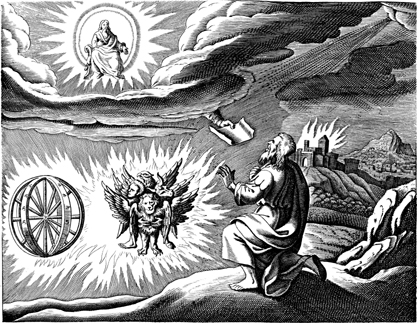 An early modern visualization of Ezekiel’s throne-chariot vision. It is a much later Christian image, included here as reception history rather than as an illustration from a Hekhalot manuscript. Public domain via Wikimedia Commons.
From Ezekiel to Heavenly Palaces
The most characteristic Hekhalot development is architectural. Heaven is described as a sequence of hekhalot, heavenly palaces or sanctuaries. In important passages, a visionary must move through seven palaces before approaching the highest divine realm.
Each palace can have gates, guardians, seals, names, hymns, and rules of access. The effect is simultaneously temple-like and courtly. Heaven resembles both a sanctuary and an imperial palace. To approach the sovereign is to pass through increasingly restricted zones.
This imagery reflects more than fantasy architecture. Late antique societies knew graded access intimately: temples, courts, bureaucracies, military commands, and royal audiences all organized proximity according to status. Hekhalot texts project such hierarchy into heaven.
At the same time, the imagery may preserve and transform memories of the Jerusalem Temple. Rachel Elior has argued extensively for connections among Temple traditions, heavenly sanctuaries, priestly memory, prayer, and sacred song. Other scholars place different weight on those continuities. The safest conclusion is that temple language and heavenly liturgy are central features of the corpus, even while the precise social history remains debated.
Why the Mystic Is Called a “Descender” to the Chariot
One of the strangest expressions in this literature is yored la-merkavah, commonly translated as “one who descends to the chariot.” Since the visionary movement appears to lead toward heaven, modern readers naturally expect “ascend.”
Scholars have proposed several explanations for the paradox. The terminology may preserve a ritual idiom whose original spatial logic is lost; “descent” may describe entry into an altered ritual state; it may refer to descent into a throne-space conceived differently from ordinary vertical geography; or different textual layers may use the language inconsistently.
The important point is not to solve the phrase with a confident modern slogan. The oddity is evidence. It tells us that the tradition’s technical vocabulary cannot always be reconstructed from ordinary spatial intuition.
Modern translations sometimes silently replace descent with ascent because ascent sounds more logical. That can erase precisely the feature historians need to explain. Good historical reading preserves difficult language before interpreting it.
When Were the Hekhalot Texts Written?
Dating is one of the field’s hardest problems. The works are attributed to famous rabbis of the second century CE, especially Rabbi Akiva and Rabbi Ishmael, but those literary attributions do not mean the surviving compositions were written by those figures.
Cambridge scholarship describes the corpus as pseudepigraphic, fluid, and formed through long processes of composition, editing, and redaction. Many scholars place substantial formation between roughly the fourth and ninth centuries CE, in Palestine and Babylonia, while recognizing earlier traditions and later transmission.
Some materials may preserve much older motifs. The Songs of the Sabbath Sacrifice from Qumran, for example, show that elaborate angelic liturgy and heavenly temple imagination existed in the Second Temple period. Yet similarity is not identity. Qumran liturgies are not simply “Hekhalot Rabbati before Hekhalot Rabbati.”
Chronological caution is essential. The corpus is a river fed by earlier streams, not a single book composed on a single date.
The Corpus Is Not One Book
“Hekhalot literature” is a modern umbrella for a group of overlapping compositions and textual units rather than a stable ancient canon. Major works include Hekhalot Rabbati (“Greater Palaces”), Hekhalot Zutarti (“Lesser Palaces”), Ma’aseh Merkavah (“Work of the Chariot”), Sefer Hekhalot or 3 Enoch, Merkavah Rabbah, materials associated with Shi’ur Qomah, and various adjurations, seals, hymns, and revelation texts.
Boundaries differ among manuscripts. Sections can migrate. One codex may combine units that modern editions separate. Another preserves only excerpts.
This fluidity is why Peter Schäfer’s synoptic approach became so important to modern research. Rather than pretending that an ideal original book survives intact, scholars compare manuscript witnesses and track how traditions were assembled.
For readers used to printed books, this can feel untidy. But the untidiness is historical information. It shows scribes and readers actively constructing the tradition.
A Cairo Genizah Codex Makes the Tradition Visible
A particularly valuable material witness is University of Pennsylvania Halper 436, a fourteenth- to fifteenth-century codex associated with the Cairo Genizah. The OPenn description identifies a collection containing Hekhalot Rabbati, Hekhalot Zutarti, Ma’aseh Merkavah, Merkavah Rabbah, seal traditions, and related material.
The manuscript is important not because it dates the origins of the traditions—the texts are older—but because it demonstrates later preservation and combination. It shows how medieval Jewish scribes inherited early mystical materials as a living textual archive.
The page itself also corrects a modern illusion. Esoteric traditions are often imagined as disembodied “secret teachings.” In reality, transmission required paper or parchment, ink, copying, correction, ownership, storage, and survival.
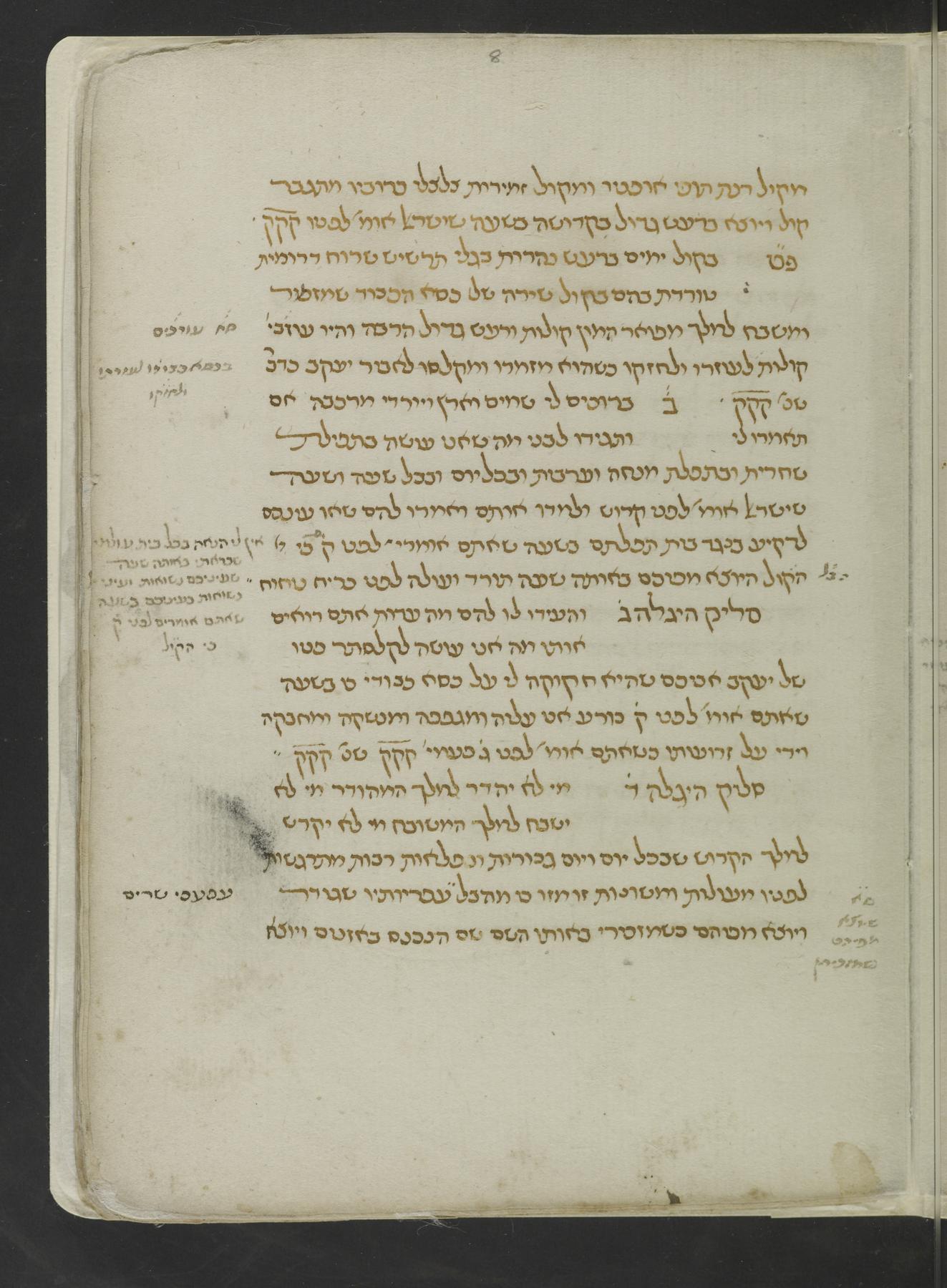 A leaf from Halper 436, a medieval codex preserving multiple Hekhalot and Merkabah traditions. University of Pennsylvania Libraries, OPenn.
Hekhalot Rabbati: Majesty, Hymns, and Dangerous Access
Hekhalot Rabbati is one of the best-known compositions in the corpus. It combines descriptions of heavenly majesty, hymnic praise, ritual preparation, angelic names, gatekeeping, and traditions connected with Rabbi Ishmael and Rabbi Nehuniah ben ha-Qanah.
The work’s heaven is not calm. It is overwhelming, regulated, and dangerous. Angels are not friendly guides designed to reassure a modern seeker. They can be terrifying officials of divine order. Wrong access can be catastrophic.
This atmosphere is essential to the tradition. The divine is attractive and lethal at once. Visionary desire therefore requires preparation, authorization, and knowledge.
Modern spirituality often turns ascent literature into a metaphor for gentle self-development. That is a legitimate modern interpretation if labeled as such, but it does not capture the emotional register of the historical texts. Hekhalot grandeur is closer to approaching an unbearable sovereign presence than to entering a relaxing meditation room.
Hekhalot Zutarti and the Problem of Fragmentary Traditions
Hekhalot Zutarti, the “Lesser Palaces,” is shorter and textually complex. It contains ascent traditions, divine names, seals, and material associated with Rabbi Akiva.
The adjective “lesser” should not be read as meaning unimportant. Titles in manuscript traditions can reflect relative length, editorial classification, or later attempts to distinguish overlapping works.
For historians, Hekhalot Zutarti is useful precisely because it resists simple reconstruction. Its textual instability exposes the way early Jewish esoteric materials circulated as clusters of traditions rather than fixed literary monuments.
Popular occult editions tend to prefer clean systems. Manuscripts show us something more realistic: memory, copying, ritual use, and interpretation continually alter systems.
Ma’aseh Merkavah: Mysticism as Liturgy
Ma’aseh Merkavah, “Work of the Chariot,” is especially rich in hymnic material. Michael Swartz’s scholarship has emphasized the importance of prayer and liturgy in understanding the text.
This matters because Hekhalot mysticism is sometimes described only as “astral travel.” The label imports a modern occult category and can obscure the role of praise. The visionary does not merely visit heaven; he joins or imitates angelic worship.
Heavenly song is theological knowledge. To know the right praise is to know something about the structure of heaven, the names of its powers, and the proper human response to divine glory.
The ritual boundary between prayer and magic can become difficult to draw because some texts also use names, adjurations, seals, and techniques of access. That ambiguity is a historical feature, not a problem to be solved by forcing every passage into one category.
3 Enoch: Enoch Becomes Metatron
Sefer Hekhalot, usually called 3 Enoch in modern scholarship, contains one of the tradition’s most extraordinary narratives. The biblical Enoch—whose scriptural biography is famously brief—is transformed into the exalted angel Metatron.
In the text, Rabbi Ishmael encounters Metatron, who recounts his transformation, heavenly status, and functions. This makes 3 Enoch a bridge between Enochic traditions and later Jewish angelology, although its precise relationship to earlier 1 Enoch and 2 Enoch traditions is complex.
Vita Daphna Arbel’s research has explored the Enoch-Metatron transformation in detail. The narrative raises difficult theological questions: how can a human become an angelic vice-regent of such extraordinary rank without compromising divine uniqueness?
The text itself negotiates that danger. Metatron can be exalted almost beyond comprehension and still remain subordinate to God.
Who Is Metatron?
Metatron is among the most famous angels in later Jewish esotericism, but modern occult culture often treats him as if every tradition agreed on one biography and function. The sources are more complicated.
In 3 Enoch, Metatron is closely linked with Enoch’s transformation. Elsewhere, traditions about Metatron can emphasize heavenly scribal functions, proximity to the throne, the Prince of the Presence, the “lesser YHWH” tradition, or other titles and roles. Not every textual occurrence belongs to one perfectly unified system.
Because Metatron occupies such an elevated position, rabbinic and later theological discussions could use him to think about the boundary between divine authority and angelic agency. David Abrams and other scholars have examined these problems of “divine ontology.”
For historical purposes, Metatron should therefore be studied as a changing textual figure rather than a fixed occult entity with a universally agreed job description.
The Gatekeepers: Heaven as Restricted Space
The seven palaces are guarded. Gatekeeping is one of the most important ritual structures in Hekhalot literature.
The visionary must possess appropriate signs of authorization—names, seals, formulas, or knowledge—to pass. Without them, hostile or suspicious angels may block the journey.
This arrangement can be read sociologically as an image of elite access. Secret knowledge creates a community by distinguishing those who possess authorization from those who do not. It can also be read liturgically: correct words align the speaker with heavenly order.
Modern fantasy often imagines secret names as passwords. The comparison is useful only up to a point. In the texts, names are not arbitrary strings. They carry theological, angelic, and ritual authority within a sacred universe.
Seals, Names, and Performative Language
Hekhalot texts repeatedly emphasize names and seals. Some names are recognizable divine or angelic forms; others are difficult sequences whose linguistic origin is uncertain or transformed.
Scholars such as Karl Erich Grözinger, Rebecca Lesses, Gideon Bohak, and Michael Swartz have examined the function of sacred names, adjuration, and ritual language. One important insight is that words do more than describe. Within the tradition’s worldview, properly uttered language can authorize, compel, reveal, protect, or transform.
Modern linguistics uses the term “performative” for speech acts that do something socially—such as declaring a marriage or issuing a sentence—because institutions recognize the speaker’s authority. Hekhalot ritual language operates within a supernaturalized theory of authority.
That comparison does not prove magical efficacy. It helps explain how ritual speech can be imagined as action rather than information.
Why Strange Names Become Stranger in Manuscripts
Sacred-name traditions create severe textual problems. A scribe copying ordinary Hebrew can often notice a grammatical error. A scribe copying an opaque angelic name may have no external standard for correction.
One altered letter can create a new form. A later copyist may then reproduce that altered form faithfully. Over centuries, textual corruption can become sacred tradition.
Gideon Bohak has identified remains of Greek words and magical formulas in Hekhalot literature, demonstrating that not every strange sequence is necessarily an invented “angelic language.” Some forms preserve contact with wider late antique ritual cultures.
Philology is therefore indispensable. Before treating an obscure word as supernatural revelation, historians compare manuscripts, languages, and parallel texts.
Fasting, Purification, and Preparation
Some Hekhalot passages prescribe demanding preparation: fasting, ritual purity, repeated immersion, isolation, or sustained recitation. The exact requirements vary by text and manuscript.
These practices have several possible functions. Religiously, purification expresses worthiness before holiness. Socially, difficult preparation limits participation. Psychologically, fasting, repetition, isolation, and expectation can alter attention and perception.
These observable human effects do not establish that the described heavenly journeys occurred objectively. Nor should historical prescriptions be imitated casually. Extended fasting, repeated immersion, sleep disruption, and other intense practices can create health risks.
A source-based history can explain ritual discipline without converting it into a practical manual.
The Dangerous Vision of Water
One famous cluster of ascent traditions concerns deceptive appearances, especially the danger of mistaking a dazzling heavenly surface for water. This material has been studied in relation to both Hekhalot literature and the rabbinic story of the four who entered Pardes.
The motif is important because it makes discernment central to mystical competence. Seeing is not enough. The visionary must interpret correctly.
This is a sophisticated religious problem. A tradition that values extraordinary perception must also explain false perception. How does one distinguish revelation from illusion? How does a person know whether a heavenly sign is genuine?
Modern psychology asks different questions, but the underlying epistemic problem remains recognizable: intense experience does not automatically validate its own interpretation.
The Four Who Entered Pardes
The Babylonian Talmud preserves the famous story of four sages—Ben Azzai, Ben Zoma, “Aher” (Elisha ben Abuyah), and Rabbi Akiva—who entered Pardes. Their outcomes differ dramatically, and Akiva alone is represented as entering and leaving in peace.
This story is often treated online as a direct manual of Merkabah ascent. Historically, the relationship is more complicated. The Mishnah already restricts exposition of ma’aseh merkavah, while later rabbinic and Hekhalot traditions develop overlapping but not identical forms of esoteric discourse.
The Pardes story became a canonical warning about dangerous knowledge. It shows that mystical access could be imagined as ethically, intellectually, and spiritually hazardous.
Later Kabbalists would reinterpret Pardes again. The same narrative therefore acquires new meanings across Jewish intellectual history.
Shi’ur Qomah: Measuring the Immeasurable
Among the most controversial materials associated with early Jewish mysticism are Shi’ur Qomah, “Measurement of the Body,” traditions that describe colossal dimensions of the divine form and assign names to its parts.
To a modern reader, this can sound crudely anthropomorphic. Historically, the texts are stranger. The measurements are so impossibly vast that they can function to magnify transcendence rather than reduce God to ordinary human proportions.
Scholars disagree over how these descriptions should be interpreted. Some emphasize liturgical and theurgic roles; others connect them to exegesis of Song of Songs, divine glory, angelology, or traditions of visionary embodiment.
Later Jewish philosophers committed to strong divine incorporeality could find such texts deeply problematic. The controversy itself is important: Jewish thought did not develop through one uncontested model of divine representation.
The Heavenly Body and the Limits of Representation
Shi’ur Qomah forces a paradox. If God cannot be contained by ordinary form, why describe dimensions at all?
One answer is that impossible measurement dramatizes the failure of measurement. Numbers expand until they cease to behave like practical quantities. The language of body becomes a tool for expressing unapproachable glory.
Another answer is historical rather than theological: early Jewish traditions may have tolerated forms of divine corporeal imagery that later philosophers found unacceptable.
Scholars such as Martin Cohen, Elliot Wolfson, David Abrams, Rachel Elior, and others have approached these texts differently. A responsible article should preserve the debate rather than announcing one interpretation as settled.
Heavenly Hymns and the Kedushah
Hekhalot literature repeatedly imagines angels praising God with extraordinary hymns. This celestial liturgy has obvious points of contact with Jewish prayer, especially traditions around the Kedushah and the scriptural cry “Holy, holy, holy.”
The question of historical influence is complex. Did synagogue liturgy shape Hekhalot hymns? Did mystical traditions influence liturgical forms? Did both draw on older temple and biblical materials? Scholars have argued different directions of influence.
What is clear is that the texts imagine worship on earth and worship in heaven as connected. The human voice can align with angelic praise.
This may be one of the tradition’s most important continuities with later Jewish mysticism: mystical knowledge is not only secret information but liturgical participation.
Magic or Mysticism? The Category Problem
Should these texts be called mysticism, magic, liturgy, or ritual? The best answer is often: different passages participate in different modes, and the modern categories overlap imperfectly.
A hymn of praise may look devotional. An adjuration commanding an angel may look magical. A visionary narrative may look mystical. A seal formula may look ritual-technological. In manuscripts, these can sit beside one another.
Cambridge scholarship explicitly warns against imposing a universal timeless category of “mysticism.” Likewise, scholars of magic emphasize that labels are historically contested.
Rather than asking which single box is correct, we can ask what the text claims to accomplish, what authority it invokes, how its language works, and how later communities classified it.
Were There Real Hekhalot Practitioners?
One of the major scholarly debates concerns whether Hekhalot texts preserve the practices of identifiable mystical groups or are primarily literary products.
Gershom Scholem famously treated Merkabah mysticism as an early stage in the history of Jewish mysticism and took the ascent traditions seriously as evidence for experiential practice. Later scholars complicated that reconstruction.
David Halperin emphasized exegesis and literary development. James Davila, in Descenders to the Chariot, revisited the question of the people behind the texts. Peter Schäfer stressed textual fluidity and redaction. Michael Swartz examined ritual, scholastic, and liturgical dimensions.
The debate remains productive because the manuscripts can preserve ritual prescriptions without telling us how often anyone enacted them. A recipe is evidence for a ritual idea; it is not automatically an ethnographic report.
Visionary Experience and the Historian’s Limits
Historical method can reconstruct texts, dates, languages, manuscript families, ritual prescriptions, and cultural contexts. It cannot directly recover the private subjective state of an anonymous person fifteen centuries ago.
A first-person account may be autobiographical, literary, pseudepigraphic, ritualized, or a combination. The use of “I saw” does not settle the question.
This is especially important in esoteric history because readers may move too quickly from textual narration to psychological diagnosis or supernatural certainty.
The historian can say: this text represents a journey; this manuscript attributes it to Rabbi Ishmael; this formula is prescribed before a gate; this hymn occurs in multiple witnesses. Claims about what an ancient practitioner objectively encountered belong to a different evidentiary category.
Hekhalot Literature and Late Antique Jewish Magic
Hekhalot traditions developed in a cultural world that also produced Jewish amulets, incantation bowls, magical texts, angelic lists, and adjurations. The overlap is real but should not be flattened into one system.
SecretMagic’s study of the Sword of Moses examines a related world of sacred names, angelic authority, and ritual language. The Sword of Moses, however, is not simply a Hekhalot book. Different textual traditions organize supernatural power in different ways.
Comparisons are useful because they reveal shared assumptions: names can matter, angels can be classified, revelation can be ritualized, and writing can function as a sacred technology.
Differences are equally useful. They prevent “Jewish magic” from becoming another invented monolith.
Hekhalot and the Greek Magical Papyri: Comparison Without Collapsing Traditions
The Hekhalot corpus can also be compared cautiously with the Greek Magical Papyri. Both preserve powerful names, ritual speech, divine or angelic hierarchies, and techniques of access to extraordinary knowledge.
But the cultural settings are different. The Greek Magical Papyri emerge from Greco-Roman Egypt and combine Greek, Egyptian, Jewish, and other elements in highly syncretic ritual collections. Hekhalot literature emerges within Jewish textual and liturgical worlds shaped by Hebrew scripture, rabbinic authority, angelology, and heavenly temple traditions.
Similarity does not prove direct borrowing. Late Antiquity was a connected environment, and ritual technologies could travel, but each textual relationship must be demonstrated.
Comparative magic is strongest when it preserves difference.
The Songs of the Sabbath Sacrifice and Earlier Heavenly Liturgy
The Songs of the Sabbath Sacrifice, preserved among the Dead Sea Scrolls and at Masada, describe angelic priesthood, heavenly worship, and celestial sanctuary imagery. They are centuries earlier than the main formation of Hekhalot literature.
Because of these similarities, scholars have explored possible lines of continuity. The Songs show beyond doubt that Jewish heavenly liturgical imagination did not begin with medieval Hekhalot manuscripts.
Yet continuity should not be overstated. The Qumran compositions do not contain the same gatekeeping system, named corpus, or developed ascent narratives found in later Hekhalot materials.
They are best understood as evidence for an earlier religious environment in which heavenly temple and angelic liturgy were already powerful themes.
Is Hekhalot Mysticism Gnostic?
Gershom Scholem’s influential phrase “Jewish Gnosticism” encouraged generations of comparison between Hekhalot literature and Gnostic traditions. There are genuine points of similarity: layered heavens, mediating beings, secret knowledge, visionary ascent, and elaborate cosmology.
Modern scholarship is more cautious because “Gnosticism” itself covers diverse ancient movements. Structural resemblance does not automatically establish shared institutional identity or direct dependence.
Philip Alexander, Nathaniel Deutsch, Guy Stroumsa, and others have explored comparison from different angles. The useful question is specific: which motif, in which text, at which date, with what evidence of transmission?
Calling every ascent tradition “Gnostic” obscures more than it explains.
Hekhalot Is Not Yet Medieval Kabbalah
This distinction is critical. Mature medieval Kabbalah develops distinctive theosophical concepts, especially the sefirot as dynamic aspects or emanations of divine reality, alongside symbolic readings of scripture and new ritual-theurgical theories.
Hekhalot literature predates that mature medieval system. Its central architecture is heavenly palaces, throne glory, angels, names, seals, liturgical praise, and visionary access.
Later Kabbalists did inherit, reinterpret, and incorporate older Hekhalot materials. Manuscript traditions continued. Metatron remained important. Divine names and angelology persisted. But inheritance is not identity.
Calling Hekhalot “ancient Kabbalah” may be convenient marketing, but it collapses centuries of development.
How Later Kabbalists Reused Earlier Mystical Material
The boundary between early mysticism and Kabbalah is chronological, not impermeable. Medieval Jewish esoteric writers read older materials and gave them new meanings.
Hekhalot traditions could be copied beside Kabbalistic texts. Older angelic and name traditions could be interpreted through sefirotic theology. Metatron could enter new cosmological frameworks.
This is how traditions actually survive. They are not preserved in glass cases. Later communities translate old concepts into new systems.
For historians, reception is therefore as important as origin. The question is not only “Where did this begin?” but “Who read it later, and what did they make it mean?”
Modern Occultism and the Reinvention of Merkabah
Modern Western esoteric movements encountered Jewish mystical materials through translations, Christian Kabbalah, scholarly works, occult correspondence systems, and later popularizations.
In some contemporary spiritual literature, “Merkabah” becomes a geometric light-body or rotating energetic vehicle. That concept should not be projected backward onto Hekhalot texts as though it were their original technical doctrine.
The historical merkavah is the divine throne-chariot rooted in Ezekiel and elaborated through Jewish mystical interpretation. Modern light-body teachings belong to a much later reception history.
A modern practitioner may find personal value in those systems, but historical honesty requires calling them modern developments rather than ancient Hekhalot instructions.
 Hans Holbein the Younger’s 1538 interpretation of Ezekiel’s vision. Like the earlier image above, this is later reception art, not a Hekhalot manuscript illustration. Public domain via Wikimedia Commons.
Common Misconception: The Merkabah Was Literally a UFO
Popular fringe interpretations sometimes claim Ezekiel described extraterrestrial machinery and that Merkabah mystics were ancient witnesses to advanced technology.
There is no historical evidence requiring that reading. Ezekiel belongs to ancient prophetic and temple-related symbolic worlds, and later Jewish interpreters treated the vision as divine throne imagery, not aerospace engineering.
Modern technological analogies can be imaginative, but they should not be presented as established history.
Common Misconception: 3 Enoch Was Written by the Biblical Enoch
3 Enoch presents revelations associated with Enoch and Rabbi Ishmael, but the work is a much later pseudepigraphic composition.
Pseudepigraphy was a widespread ancient and medieval literary practice. Attributing revelation to an authoritative figure gave a text sacred pedigree.
Recognizing pseudepigraphy does not make the work fraudulent in the simplistic modern sense. It places it correctly within a literary culture where authority could be constructed through ancient voices.
Common Misconception: Metatron Is a Second God
Some texts grant Metatron extraordinary titles and proximity to divine authority. Rabbinic and scholarly discussions show why this could create theological tension.
But the Hekhalot tradition does not simply replace Jewish monotheism with a second equal deity. Narratives frequently emphasize the difference between exalted angelic agency and God.
The tension is historically important precisely because the boundary requires negotiation. Metatron’s greatness raises the question; the tradition repeatedly works to prevent the answer from becoming simple divine equality.
Common Misconception: Every Hekhalot Ritual Was Practiced Exactly as Written
A manuscript instruction is not a video recording of a ritual.
Some prescriptions may reflect real practice. Others may be literary idealizations, scholastic exercises, inherited formulas, or procedures copied because they were authoritative.
Historians compare multiple kinds of evidence before moving from text to social reality. This caution is especially important when a ritual requires extreme fasting or other unusual preparation.
The existence of the instruction is certain; the frequency and manner of performance often are not.
A Symbolic Reading: The Seven Palaces as Controlled Proximity
For a modern symbolic reading, the seven palaces can represent progressively restricted proximity to what a tradition considers ultimate.
Every gate demands discernment. Every guardian asks whether the traveler is authorized. Every seal expresses identity. The architecture dramatizes a truth that religious traditions often encode spatially: deeper access carries greater responsibility.
This is a modern philosophical interpretation, not a claim that ancient authors secretly meant psychological stages. Its value lies in explaining why the imagery remains compelling.
The heavenly palace externalizes an inner problem of knowledge: not everything should be approached in the same way.
A Philosophical Reading: Knowledge That Changes the Knower
Ordinary information can be acquired without transforming identity. Hekhalot literature imagines a different kind of knowledge.
To know heaven is to survive proximity to divine glory, master sacred language, understand angelic order, and become capable of joining celestial praise. In 3 Enoch, the principle reaches an extreme: Enoch’s heavenly knowledge coincides with transformation into Metatron.
The tradition therefore treats knowledge as ontological. The knower becomes different.
This idea appears in many mystical and philosophical traditions, but the Hekhalot form is distinctive because transformation is represented through throne, palace, angel, seal, and liturgy rather than through later Kabbalistic emanation language.
Why Hekhalot Literature Matters to the History of Western Esotericism
Hekhalot literature matters first because it belongs to Jewish religious history in its own right. It should not be valued only as a prelude to Christian occultism.
Yet its later influence is substantial. Angelology, divine names, Metatron traditions, ascent imagery, and older mystical texts entered medieval Kabbalah, Christian Kabbalah, scholarly Orientalism, and modern ceremonial esotericism through complex channels.
The corpus also provides a methodological lesson for all esoteric history: traditions are rarely single systems. They are manuscript ecosystems.
Once that point is understood, Western esotericism looks less like an unbroken secret lineage and more like a history of preservation, commentary, translation, borrowing, disagreement, and reinvention.
How to Study Hekhalot and Merkabah Literature Responsibly
Start with scholarly introductions before practical or occult adaptations. Rachel Elior’s chapter in The Cambridge History of Judaism offers a major synthesis. Vita Daphna Arbel’s work examines mystical and mythic structures. Peter Schäfer’s studies focus on textual history and major themes. Michael Swartz studies prayer and ritual. James Davila investigates the people imagined behind the literature.
Then look at manuscripts. University of Pennsylvania’s OPenn project makes Halper 436 accessible as a material witness.
Keep three questions separate: what the manuscript says, what historical practitioners may have believed or done, and what modern readers interpret symbolically.
Finally, resist collapsing Hekhalot into Kabbalah, UFO mythology, New Age light-body systems, or one universal mystical technique. The corpus is already fascinating without importing later categories.
Frequently Asked Questions
What does “Merkabah” mean?
Merkabah means “chariot.” In this context it refers especially to the divine throne-chariot associated with Ezekiel’s vision.
What does “Hekhalot” mean?
Hekhalot means “palaces” or “sanctuaries.” The term names heavenly halls that appear prominently in early Jewish mystical literature.
Is Merkabah mysticism the same as Kabbalah?
No. Hekhalot and Merkabah traditions are earlier and structurally different from mature medieval Kabbalah, although later Kabbalists inherited and reinterpreted some of their materials.
Who is Metatron?
Metatron is an exalted angelic figure. In 3 Enoch, the biblical Enoch is transformed into Metatron. Other Jewish texts preserve additional roles and traditions.
What are the seven palaces?
They are heavenly sanctuaries through which visionary figures move in major Hekhalot traditions. The passages describe gatekeepers, seals, names, praise, and increasingly dangerous proximity to divine glory.
Did people literally practice heavenly ascent rituals?
Some texts prescribe ritual preparation and ascent procedures, and scholars debate the extent to which they reflect enacted practice. The manuscripts establish the existence of the prescriptions, not the objective reality of supernatural travel.
What is Shi’ur Qomah?
It is a group of traditions concerning immense “measurements” of the divine form and sacred names. The material is controversial and has been interpreted in several ways by scholars.
Is Metatron another name for God?
No simple equation is historically adequate. Some texts give Metatron astonishingly exalted titles, but Jewish traditions also maintain distinctions between angelic authority and God.
Is the modern “Merkaba light body” ancient Hekhalot teaching?
No. Modern geometric and energetic “Merkaba” systems are later spiritual developments and should not be projected unchanged into late antique Hekhalot texts.
Conclusion: Before Kabbalah, Heaven Was a Palace of Dangerous Knowledge
Hekhalot and Merkabah literature preserves one of the most extraordinary religious imaginations of Late Antiquity and the early medieval Jewish world. It begins with a biblical chariot and turns it into architecture. Ezekiel’s wheels become a vast celestial order of gates, palaces, angels, seals, songs, names, and dangerous proximity.
The tradition is neither simply “magic” nor simply “mysticism.” It contains praise and adjuration, liturgy and command, theology and ritual technology, literary vision and possible practice. That mixed character is precisely why it matters.
It also forces modern readers to revise familiar histories. Kabbalah did not appear from nowhere, but neither can every earlier Jewish esoteric text be renamed Kabbalah. Metatron did not emerge as a modern New Age archangel with a fixed profile. The Merkabah was not an ancient spaceship. First-person heavenly journeys are not transparent transcripts of events that historians can independently verify.
What the evidence does show is remarkable enough. Jewish scribes preserved a fluid corpus in Hebrew and Aramaic. They attributed revelatory authority to revered rabbis. They imagined heaven as a restricted sanctuary whose gates opened through knowledge, purity, praise, seals, and names. They debated, implicitly and explicitly, how close an angel could come to divine authority and how a human being could survive divine presence.
The corpus also preserves a profound theory of knowledge. Sacred knowledge is not harmless. To know is to cross a boundary. The heavenly gatekeeper is therefore not merely an obstacle; he represents the seriousness of access.
This may be the most enduring philosophical insight of Hekhalot literature. Modern information culture assumes that more access is always better. These texts imagine the opposite possibility: some knowledge demands preparation because knowledge can change the knower.
Historically, we cannot prove the supernatural journeys described by the manuscripts. We can prove that generations of readers considered these journeys meaningful enough to copy, combine, transmit, annotate, debate, and reinterpret. That material history is the foundation on which responsible study must stand.
And once we stand there, the Hekhalot world no longer looks like a footnote before Kabbalah. It becomes what it was: a major Jewish experiment in imagining how prayer, scripture, angelology, ritual language, and visionary authority might open the gates of heaven.
Sources and References
- Vita Daphna Arbel, “Early Jewish Mysticism,” in The Cambridge Handbook of Western Mysticism and Esotericism, Cambridge University Press, 2016
- Rachel Elior, “Early Forms of Jewish Mysticism,” in The Cambridge History of Judaism, Cambridge University Press, 2006
- University of Pennsylvania Libraries, OPenn — Halper 436, Sefer Hekhalot manuscript
- Vita Daphna Arbel, “The Enoch/Metatron Narrative of 3 Enoch and Ezekiel 28,” Harvard Theological Review
- David Abrams, “The Boundaries of Divine Ontology: The Inclusion and Exclusion of Metatron in the Godhead,” Harvard Theological Review
- Peter Schäfer, The Hidden and Manifest God: Some Major Themes in Early Jewish Mysticism, SUNY Press, 1992.
- James R. Davila, Descenders to the Chariot: The People Behind the Hekhalot Literature, Brill, 2001.
- Michael D. Swartz, Mystical Prayer in Ancient Judaism: An Analysis of Ma’aseh Merkavah, Mohr Siebeck, 1992.
- David J. Halperin, The Faces of the Chariot: Early Jewish Responses to Ezekiel’s Vision, Mohr Siebeck, 1988.


